
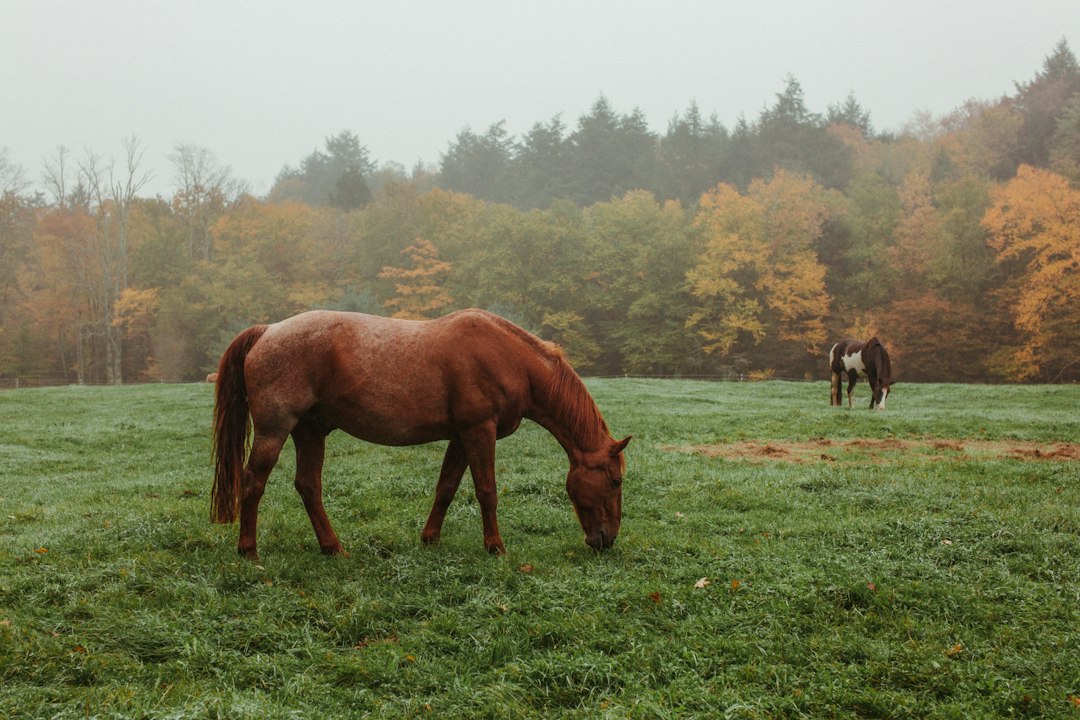
Planning now can save time, money and a lot of headaches later.
Winter is a good time to look ahead to the coming spray season. If you have horses, a small paddock or a field that is difficult to access, getting in touch early gives us time to discuss what is growing, what needs attention and when the work may be suitable.
Farm machinery can be too large for some horse paddocks and smaller fields. We can discuss access and plan for places where larger equipment may not be practical.
Sycamore seeds and seedlings: take care around horses
Sycamore seeds, leaves and seedlings can contain hypoglycin A (HGA), which is associated with atypical myopathy, a serious and potentially fatal disease in horses. Spraying or mowing sycamore seedlings does not remove the toxin, so spraying alone must not be treated as making a paddock safe. (Source: British Horse Society)
If you have sycamore trees in or near your fields, HERDpestcontrol strongly advises arranging an annual test of sycamore seeds, leaves or seedlings for HGA. The Royal Veterinary College offers testing of plant samples. HGA levels can vary between trees and from year to year, so a previous result is not a guarantee that the field is safe this season. Follow the laboratory's sampling instructions and discuss the results and grazing precautions with your vet. (Source: Royal Veterinary College)

Young sycamore seedlings. Photo: Alain.jotterand, CC BY-SA 3.0, via Wikimedia Commons.


Sycamore seedling. Photo: Kenraiz, CC BY-SA 4.0, via Wikimedia Commons.

Look for weeds while they are small
Ragwort is poisonous to horses and livestock, including when dried. It can start as a low-growing rosette before sending up a flowering stem, so checking fields early helps you spot it before it spreads further. (Source: British Horse Society)

Common ragwort. Photo: Agnieszka Kwiecień, Nova, CC BY-SA 4.0, via Wikimedia Commons.

Thistles are easier to plan for when they are still small and at the rosette stage. Docks and buttercups can also take up space and reduce the grass available for grazing. Buttercups can be harmful if eaten. Correct identification and timing matter, and the right approach depends on the plants and the paddock. (Source: Corteva Agriscience)

Spear thistle rosette. Photo: Harry Rose, CC BY 2.0, via Wikimedia Commons.


Creeping buttercup. Photo: Evelyn Simak, CC BY-SA 2.0, via Wikimedia Commons.


Broad-leaved dock. Photo: Susan Marley, CC BY 4.0, via Wikimedia Commons.

Book early and plan ahead
We currently have stocks of some herbicides, but availability can change and chemical costs are due to rise. Booking a discussion about your paddock now gives us the chance to check what is needed, talk through access and timing, and confirm current availability and pricing. Early planning may help you avoid a higher price later, subject to stock and supplier prices.
Every paddock is different. We'll discuss the plants present, access, horse management and suitable timing. Any treatment must follow the product label and relevant grazing or re-entry instructions.
Call HERDpestcontrol on 01333 771000 or email info@herdpestcontrol.com to discuss your paddock spraying needs and reserve a spray slot. You can also read more about our paddock spraying service.
Plant photographs are examples to help illustrate the species; they are not a substitute for identification on site. For horse health concerns, contact your vet.