
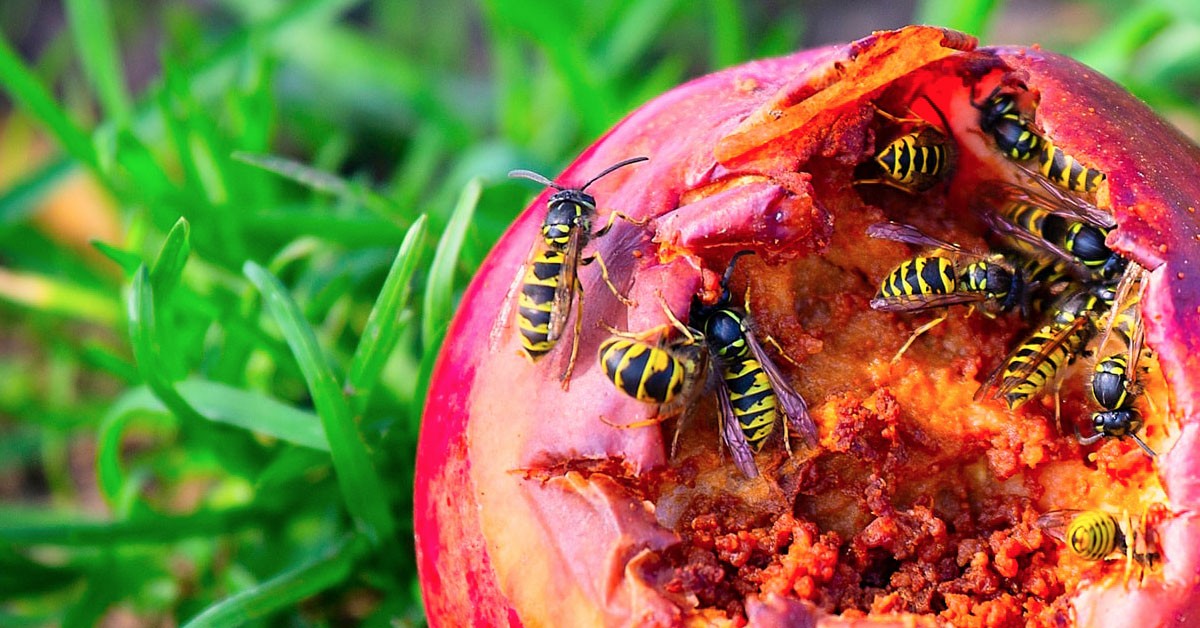
Wasps Are Not for Everyone, But They Really Are Quite Amazing
Check out these wasp facts.
Where and How They Live
Wasps live everywhere except Antarctica, and are found in nearly every country in the world.
Worldwide, there are over 120,000 species of wasp. In the UK alone there are around 9,000 species, though only 9 of these are social, nest-building wasps.
Most wasps live less than a year, some workers for just a few months, while queens can live for several years.
A queen starts a new colony each spring. She raises a few worker wasps first to make the nest larger and bring food, then starts laying eggs. A colony can grow to 50,000 wasps by summer.
In autumn, all the wasps die off except for a few new queens. These queens spend winter in an old log or burrow, then start new colonies the following spring.
How They're Built
Wasps build nests from paper, chewing up strips of bark and spitting it out to form a rough paper material.
All social wasps, meaning those that aren't parasitic, build nests. The vast majority of solitary wasps, by contrast, make their nest in the ground instead.
What Makes Them Wasps
Wasps are fierce predators, hunting and eating almost every insect pest that harms crops.
Wasps can sting over and over again, and in stinging species, only the females have a sting.
They come in every colour imaginable, from yellow to black, metallic blue and green, and bright red and orange.
The largest social wasp is the Asian giant hornet, reaching up to 5 centimetres in length.
All wasps go through complete metamorphosis. A larva hatches from the egg, grows, and sheds its skin several times before becoming a pupa. Inside the pupa, the body transforms until an adult eventually emerges.
Wasps vs Bees
Some wasp species look similar to bees, but they're distinguishable by their pointed lower abdomens and narrow "waist," known as a petiole, which separates the abdomen from the thorax. They also have little to no hair on their bodies, unlike bees, and don't play much of a role in plant pollination as a result.
One Last Fact
Vespa scooters are named after wasps. "Vespa" means "wasp" in Italian.
Do You Have a Problem With Wasps?
We can provide you with not only a wasp nest removal service but also the advice you need to deal with wasps.